Popular Screen Cultures and Identity
This area explores how varying and diverse types of identity are perceived within Popular Screen Cultures media. If you would like to read more about a work, please follow the link attached in underlined text to discover more.
Trigger warning: Some of the texts may discuss or analyse sensitive topics such as discrimination.
Aldana Reyes, X. (2017) ‘Dracula Queered.’ In Luckhurst, R. (ed.) The Cambridge Companion to Dracula. Cambridge: Cambridge University Press, pp. 125-135.
Aldana Reyes, X. (2015) ‘Mobilising Affect: Somatic Empathy and the Cinematic Body in Distress.’ In Sellberg, K., Wånggren, L., Aghtan, K. (ed.) Corporeality and Culture: Bodies in Movement. Farnham: Ashgate Publishing, Ltd., pp. 35-46.
Alleyne, M., Fairclough, K., 2020. ‘Glam slammed: Visual identity in Prince’s Lovesexy’. In Prince and Popular Music Critical Perspectives on an Interdisciplinary Life, pp. 67-75.
Aroni, G., 2023. ‘A missile to the face: scarred characters in Mass Effect 2’. In Ellis, K., Kent, M., Leaver, T. (eds.) Gaming Disability: disability perspectives on contemporary video games, pp. 81-91, Routledge, London.
Aroni, G., Chapdelaine-Feliciati, C., 2026. ‘The Representation of Burn Survivors in Video Games Under the UN Convention on the Rights of Persons with Disabilities’, International Journal for the Semiotics of Law.
Aroni, G., 2025. ‘Cultural Heritage in Chinese Digital Games’, Youth and Globalization, 6 (1-2), pp. 166-189.
Aroni, G., 2026. ‘Empowered by Play: How Female Players and Developers Shape Female Character Representation in Chinese Video Games’. In Chapdelaine-Feliciati, C., Jiaotong, X. (eds.) Girls’ Positionalities at the Intersection of Identity and Violence, pp. 81-94, Springer, Cham, Switzerland.
Carter, M. (2015) ‘Crossing the Beast: American Identity and Frontier Mythology in Sin Nombre..’ In MMU Cheshire Interdisciplinary Conference: ‘Contested Spaces: Shared Places’. Manchester Metropolitan University, Cheshire Faculty, Crewe, 11/7/2015 – 11/7/2015.
Carter, M. (2013) ‘‘I’m just a cowboy’: Transnational Identities of the Border Country in The Three Burials of Melquiades Estrada.’ In Nelson, A.P. (ed.) Contemporary Westerns: Film and Television Since 1990. The Scarecrow Press, Inc., pp. 149-169.
Carter, M. (2018) ‘“I’ve Been Looking for You”: Re-configuring Race, Gender, and the Family through the Female Agency of The Keeping Room.’ Papers on Language and Literature, 54(1) pp. 25-45.
Carter, M. (2017) ‘Reappropriating Western Violence for Feminism in Mad Max: Fury Road..’ In 62nd British Association for American Studies (BAAS) Annual Conference. Canterbury Christ Church University, 6/4/2017 – 8/4/2017.
Carter, M., Paryz, M. (2018) The Visual Language of Gender and Family in the Western (Special Issue of Papers on Language and Literature). Southern Illinois University.
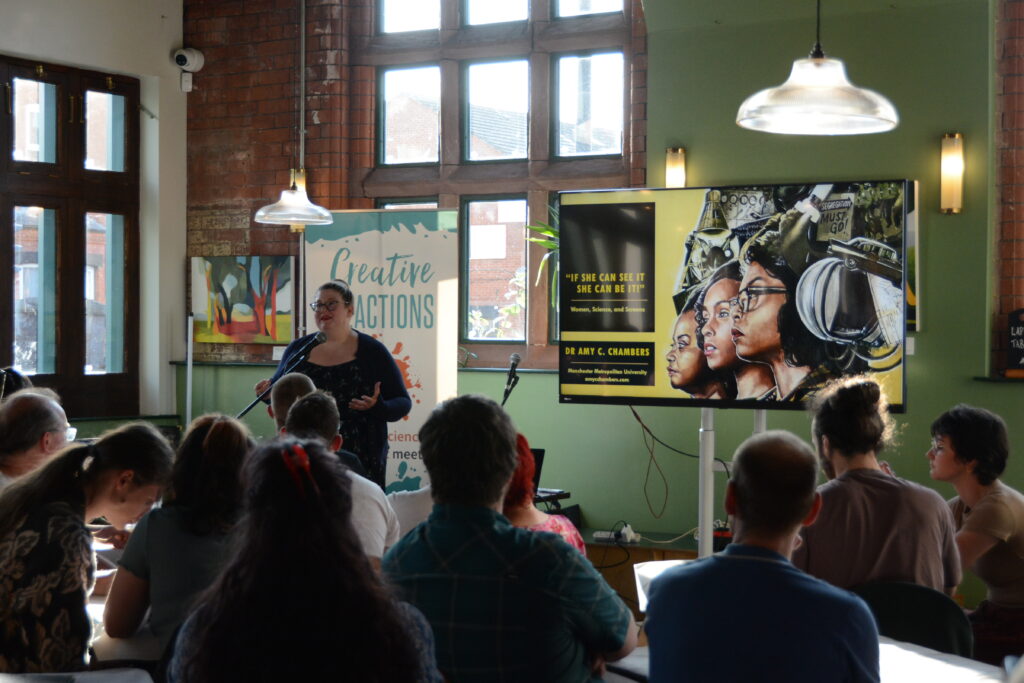
Chambers, A.C. (2015) If She Can See It, She Can Be It: Women of STEM on the Small Screen.
Chambers, A. (2022) ‘Representing Women in STEM Science-Based in Film and Television.’ In Jones, C., Martin, A.E., Wolf, A. (ed.) The Palgrave Handbook of Women and Science since 1660. Palgrave,
Chambers, A.C. (2015) Rise of the Women?: Screening Female Scientists.
Chambers, A. (2020) ‘Star Trek Discovers Women: Gender, Race, Science, and Michael Burnham.’ In Spychala, M., Mittermeier, S. (ed.) Fighting for the Future – Essays on Star Trek: Discovery. Liverpool University Press, pp. 267-286.
Chambers, A. (2022) ‘‘The handsome astronomer and the yelling lady’: representing scientists and expertise in Don’t Look Up.’ JCOM, 21(5) pp. C04-C04.
Chambers, A.C. (2015) ‘You’re Blind, But You See So Much’: Netflix’s Daredevil and Blindness. http://thescienceandentertainmentlab.com/daredevil/.
Chambers, A.C. (2016) You gotta make way for the Homo Superior: Mutation, Evolution, and Super Powers on Screen.
Chard, H., Litherland, B. (2019) ‘“Hollywood” Hulk Hogan: Stardom, Synergy, and Field Migration.’ Journal of Cinema and Media Studies, 58(4) pp. 21-44.
Crome, A. (2019) ‘Cosplay in the pulpit and ponies at prayer: Christian faith and lived religion in wider fan culture.’ Culture and Religion, 20(2) pp. 129-150.
Crome, A. (2015) ‘Implicit religion in popular culture: The case of doctor who.’ Implicit Religion, 18(4) pp. 439-455.
Crome, A. (2015) ‘Left Behind or Left Below? Parodies of Christian End-Times Fiction in American Popular Culture.’ JOURNAL OF AMERICAN CULTURE, 38(4) pp. 386-400.
Crome, A. (2015) ‘Religion and the Pathologization of Fandom: Religion, Reason, and Controversy in My Little Pony Fandom.’ Journal of Religion and Popular Culture, 27(2) pp. 130-147.
Crome, A. (2020) ‘“Wonderful”, “Hot”, “Good” Priests: Clergy on Contemporary British TV and the New Visibility of Religion Thesis.’ Religions, 11(1)
Dixon, I., Wong, A., Fairclough, K., Gotto, L., 2025. ‘Starring Asian Femininities: Evolutions of Femaleness on Screen’, Bloomsbury.
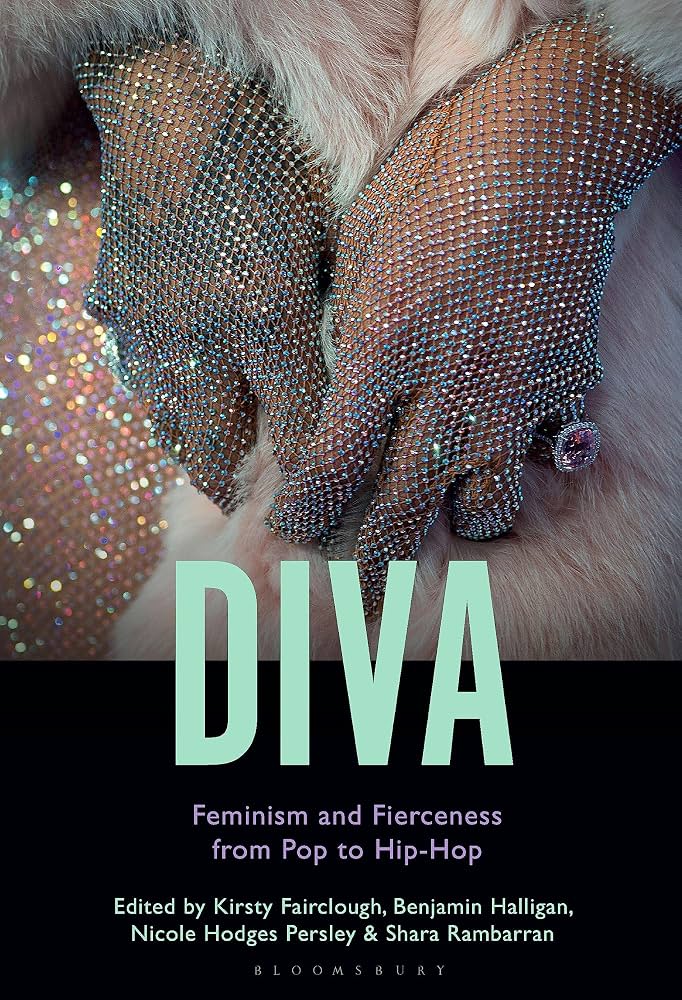
Fairclough, K., Halligan, B., Hodges Persley, N., Rambarran, S., 2023. ‘Diva: Feminism and Fierceness from Pop to Hip-Hop’, Bloomsbury, London.
Fairclough, K., Halligan, B., Hodges Persley, N., Rambarran, S., 2023. ‘Introduction: Y’all! the diva and us’. In Diva: Feminism and Fierceness from Pop to Hip-Hop, pp. 1-21, Bloomsbury, London.
Fairclough-Isaacs, K., 2016. ‘Beyoncé’s Celebrity Feminism and Performances of Female Empowerment in the Arena Concert’. In, pp. 279-290, Bloomsbury Publishing Plc.
Fairclough-Isaacs, K., 2015. ‘<b>Spectacular girls: media fascination and celebrity culture</b>, by Sarah Projansky, New York, New York University Press, 2014, 294 pp., £16.99 (paperback), ISBN 978-0-81-472481-1′, Celebrity Studies, 6 (4), pp. 618-619.
Fairclough, K., 2017. ‘Soundtrack Self: FKA twigs, Music Video, and Celebrity Feminism’. In Music Video Histories Aesthetics Media, pp. 121-131.
Fairclough-Isaacs, K., 2014. ‘Lost Voice Guy: Transcending Barriers of Disability through Technology in Live Comedy Performance’. In Lecture Notes of the Institute for Computer Sciences, Social Informatics and Telecommunications Engineering, pp. 91-98, Springer International Publishing.
Fairclough-Isaacs, K., 2014. ‘Mature Meryl and Hot Helen’. In Ageing, Popular Culture and Contemporary Feminism, Palgrave Macmillan.
Herrero, C., Escobar-Montero, M. (2025) ‘The “Imperfect” (Single) Mother in La hija de un ladrón/A Thief’s Daughter (2019) and Ama (2019).’ In Liddy, S., Flynn, D. (ed.) The Routledge Handbook of Motherhood on Screen. Routledge,
Herrero, C. (2009) ‘Reflections of female scorn: un cos al bosc (1996, Joaquim Jordà) and el alquimista impaciente (2002, Patricia Ferreira).’
Herrero, C. (2021) ‘Visual Explorations of a New Life: Language, Identity and Landscape in El futuro perfecto and Ingen Ko På Isen.’ In Brownlie, S., Abouddahab, R. (ed.) Figures of the Migrant The Roles of Literature and the Arts in Representing Migration. Routledge,
Suarez, Marta F. (2019) “Damaged Survivors in ‘The Walking Dead’ (TV): Conflict, Gender and Performativity in relation to Daryl and Carol’s Narrative Arcs.” in Gerrard, Stephen et al. (eds.) Gender and Contemporary Horror in Television; Emerald Group Publishing
Suarez, Marta F. (2019) “Motherhood, domesticity and nurture in the post-apocalyptic world: negotiating femininity in “The Walking Dead” in Baqué, Zachary; Maury, Cristelle and Roche, David (eds.) Women who Kill in English-Speaking Cinema and TV Series of the Postfeminist Era. n.l.: Bloomsbury
Suarez, M.F. (2025) Projecting Mexico to the world: updating hybridity in Diablero (2018-2020). Transnational Screens, 16 (1), pp. 1-19.
Warren, J. (2022) ‘A queer touch of fantasy role-play.’ Material Game Studies A Philosophy of Analogue Play. pp. 65-82.
Warren, J. (2024) ‘Queer Thinking with Digital Stones.’ Video Games and Environmental Humanities Playing to Save The World. Palgrave Macmillan,
Wood, R., Litherland, B., Reed, E. (2020) ‘Girls being Rey: ethical cultural consumption, families and popular feminism.’ Cultural Studies, 34(4) pp. 546-566.